
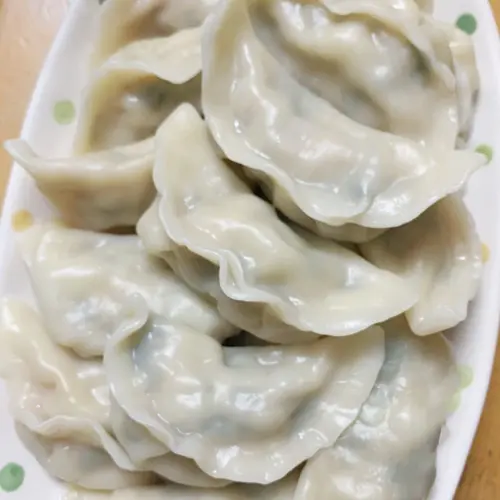
Just returning to work from the Chinese New Year holiday, I think it’s time to share one of the most universally beloved foods enjoyed during this festive time: dumplings.
While dumplings are cherished throughout China, they hold a special significance in Northern Chinese cuisine, where they’re often a staple on New Year’s Eve. In contrast, my family, from the south of China, also adores dumplings but doesn’t consider them necessary for the New Year’s Eve feast.
Additionally, our dumplings stand out as we use sweet potato flour for the wrappers instead of traditional wheat flour. Though crafting such kind of dumplings is more intricate, their flavor is much more impressive and amazing. They are a culinary gem unique to my hometown and you may have never seen them. Even in China, my friends from other cities know nothing about them, but they all love these special dumplings. The wrappers are chewy and have a slightly and naturally sweet taste.
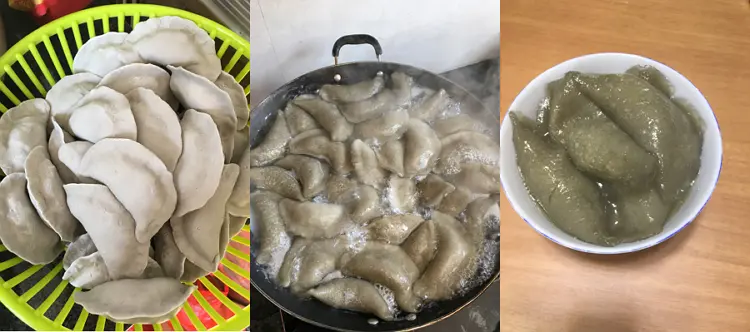
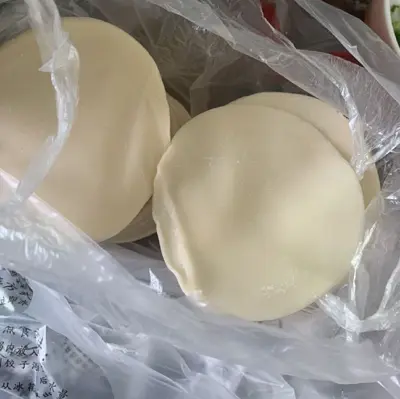
However, in this article, I’m not going to share how to make dumplings using sweet potato flour or wheat flour, because I will directly use the ready-made dumpling wrappers made from wheat flour which are readily available in Chinese supermarkets. Crafting the wrappers is a complicated and time-consuming process, so using the ready-made wrappers will save a lot of time. Most importantly, they may taste better than your hand-made wrappers if you are not good at it.
While the wrapper is essential, the filling truly determines the success or failure of the dumplings. Each family in China has its own unique dumpling filling recipe, and I’m excited to share mine with you.
Let’s get started.
Ingredients
- 800g pork
- 700g green onions
- 350g white radish
- 1 egg (raw)
- 90-100 pre-rolled dumpling wrappers
Make sure to choose pork with a good balance of lean and fat, preferably from the front or hind legs. You can also use tenderloin, but be sure to include some fatty meat. All lean meat will result in a tough and dry filling without enough moisture or flavor.
Select fresh green onions. Fresh green onions typically have crisp, vibrant green stalks with firm, white bulbs. The tops should be perky and not wilted, while the bulbs should be free of any blemishes or soft spots.
Select fresh white radishes. Fresh white radishes come with high moisture content. You can test this by gently pressing your fingernail into the radish. Fresh radishes will release moisture easily. White radishes primarily add texture to the filling, making it softer and less greasy. Do not use the carrot to replace it.
The egg is used to make the dumpling filling tender.
About the wrappers, don’t purchase wonton wrappers instead. Dumpling wrappers are typically round, while wonton wrappers are square and thinner. If you don’t have access to pre-rolled wrappers, you can learn how to make them yourself through this guide.
For the dumpling sauce, here are some ingredients you need to prepare:
- Chili peppers, diced
- Green onions, chopped
- Garlic, minced
The quantities of these ingredients should be adjusted according to the number of people served. Typically, I use 1 small chili pepper, 1 green onion, and 1 clove of garlic for 1 person.
Seasonings
The seasonings below are used for the dumpling filling.
- Salt to taste
- 1/2 tbsp light soy sauce
- 1/4 tsp chicken bouillon (Optional)
- 1/2 tbsp ground white pepper
Ground white pepper is the soul of the dumpling filling. For a more aromatic flavor, avoid store-bought powder and grind your own white pepper right before adding it to the filling.
How to Prepare Dumpling Filling
You don’t need additional tools to prepare the filling, but if you have a grinder, it will be good.
Step 1. Prepare the Green Onions
Cut off the root ends of the green onions, then rinse them thoroughly to remove any dirt or debris. Trim off any wilted or discolored parts. After cleaning, leave the green onions to dry off completely. If you’re short on time, you can pat them dry with kitchen paper to remove excess moisture.
If you don’t dry the green onions properly, the water will mix with the dumpling filling. This will make it difficult to seal the edges of the dumplings, and they may fall apart during cooking. The dumplings may also stick together or break open before they are cooked.
Step 2. Prepare the White Radish
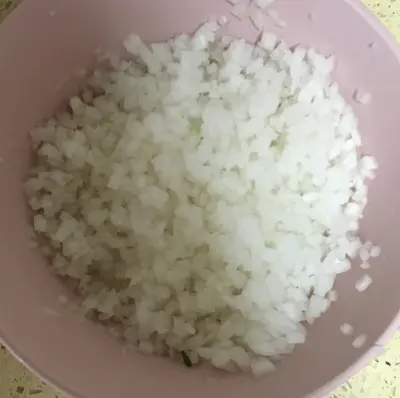
Peel the radish and cut it into small cubes as shown in the picture. If you have a meat grinder, you can also use it to grind the radish, but be careful not to make it too fine because you still want to maintain some texture. Place the chopped radish in a bowl, add a pinch of salt (about 1/8 tsp), mix well, and set aside. Adding salt helps to extract moisture from the radish and prevents the filling from becoming too watery.
Step 3. Prepare the Ground Pork
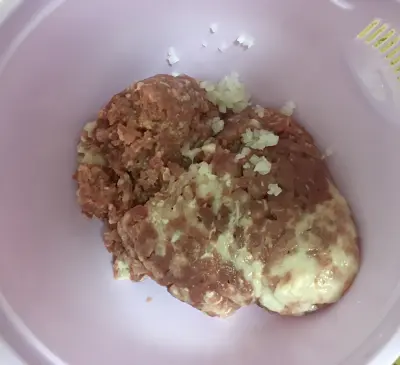
Whether using a meat grinder or chopping by hand, be sure to remove excess moisture. If using a grinder, avoid over-grinding the meat, as it may result in a mushy texture. Personally, I prefer the texture of hand-chopped ground pork, which provides a slightly firmer texture.
Step 4. Chop the Green Onions and Squeeze the Radish
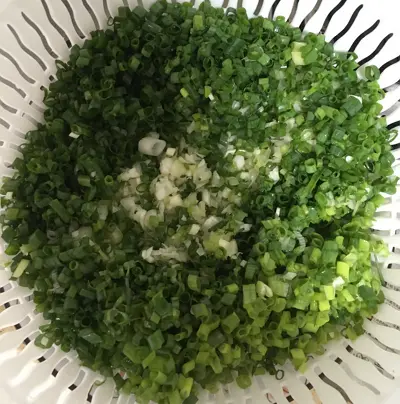
Once the ground pork is prepared, use your hands to squeeze out excess moisture from the chopped radish, then add it to the bowl with the ground pork. By this time, the green onions should also be mostly dried; if not, use kitchen paper towels to pat them dry. The green onions must be hand-chopped. Do NOT use a grinder. Otherwise, it will be a disaster. Add the chopped green onions to the bowl with the pork and radish mixture, using a large bowl for ease of mixing.
Step 5. Season the Dumpling Filling
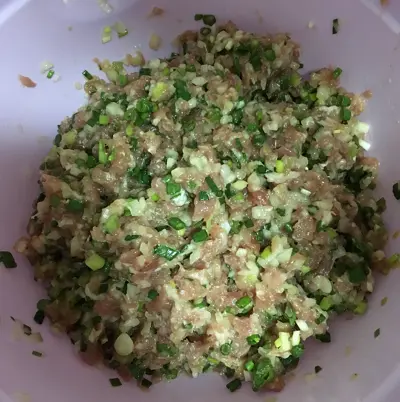
With all the ingredients prepared, it’s time to season the filling. Add light soy sauce, salt to your taste, chicken bouillon (optional), 1/2 tbsp light soy sauce, 1/2 tbsp ground white pepper, and 1 egg. Put on some gloves and mix everything gently. You can also use a large spoon or chopsticks, like I do. Do not squeeze the ingredients, as this may squeeze out the water from green onions.
If you’re unsure about the amount of salt, start with a small amount, mix well, and taste a small piece of radish or green onion to gauge the seasoning. If it’s too bland, adjust accordingly.
How to Wrap Dumplings
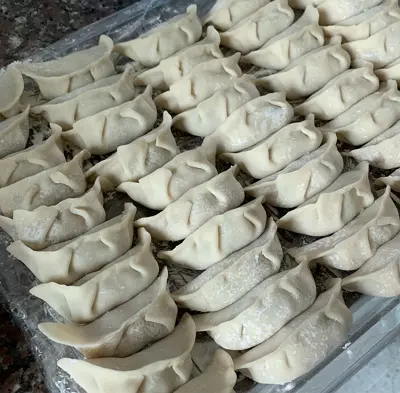
Once the dumpling filling is ready, it’s time to wrap the dumplings. There are many different ways to wrap dumplings and some may be hard for beginners, but take it easy. I’ll show you the easiest one (not the shape shown in the image below). You don’t have to make them perfect. Just remember to seal the edges firmly. Then you can enjoy complete dumplings.
- Place a small spoonful of filling in the center of a dumpling wrapper.
- Moisten the edge of the wrapper with water. If using homemade wheat flour wrappers, this step is unnecessary because such wrappers are usually soft and can be pinched easily.
- Fold the wrapper in half to create a half-moon shape, enclosing the filling.
- Pinch the edges together firmly to seal the dumpling.
- Repeat the process with the remaining wrappers and filling.
Place the dumplings flat on a tray. Do not stack them to avoid sticking.
How to Cook Dumplings
Dumplings can be enjoyed either pan-fried, steamed, or boiled, but boiling is the most popular method. Below are the steps of the boiling method:
- Bring a pot of water to a boil.
- Gently add the dumplings to the boiling water. Make sure they are not overcrowded and have enough space to move freely.
- Stir gently to prevent sticking.
- Once the water comes back to a boil, add a cup of cold water to lower the temperature. Repeat this step twice.
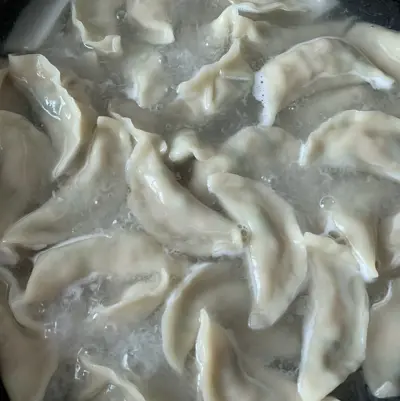
- When the dumplings float to the surface and the water boils again, they are usually cooked. You can double-check by cutting one open to ensure the filling is cooked through.
- Use a slotted spoon to remove the dumplings from the pot.
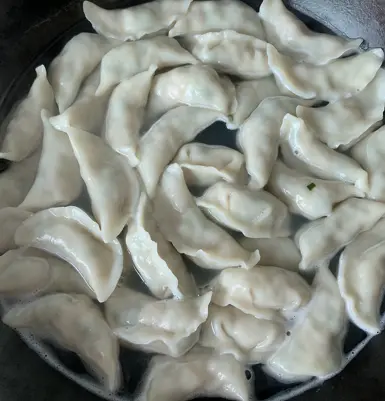
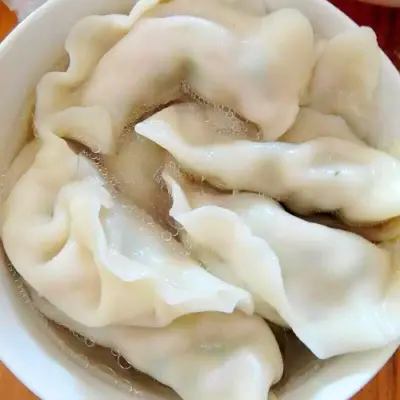
Once cooked, boiled dumplings can be eaten with dipping sauce or added to soup. The simplest method is to transfer the dumplings to a large bowl and add some boiling water, some light soy sauce, sesame oil and salt. If you have chili sauce, adding a bit will make it even more delicious.
How to Make Chinese Dumpling Sauce
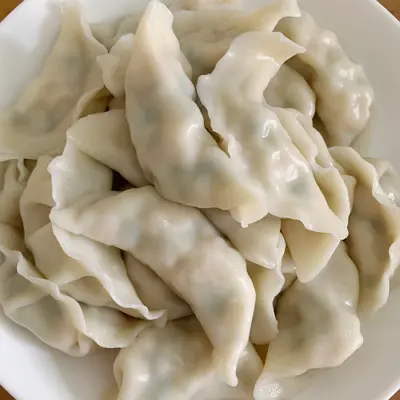
Once cooked, boiled dumplings can be eaten with dipping sauce or added to soup. Here, I’ll share the way of eating with dipping sauce. Please note that dumplings are usually served hot, so make sure you have the dipping sauce ready before the dumplings are cooked.
Prepare some diced chili peppers, chopped green onions, and minced garlic. If you have other ingredients such as cilantro, feel free to add them too.
- Heat a pan, add oil, and then add the diced chili peppers, chopped white part of green onions, and minced garlic.
- Stir fry the ingredients until fragrant and then add some light soy sauce.
- Keep stir fry a few times and then add a moderate amount of water.
- Season with salt, and a little vinegar. Once the mixture comes to a boil, add the chopped green part of green onions, then remove from heat.
Your dipping sauce is now ready! Enjoy your dumplings!
How to Store Dumplings
I like to make a lot of dumplings at a time, about 100 or so. That way, I can just cook some dumplings when I don’t want to cook, which is quick and easy.
If you also plan to make a lot of dumplings at a time, you can place the dumplings evenly on a tray and then freeze them. It is best to avoid any sticking of the dumplings so that they don’t stick together when cooking. If only a small part of them is stuck together, you can gently separate them before cooking. If they can’t be separated, don’t force it, otherwise they will break and become difficult to cook. In that case, you can only steam them.
After about 1-2 hours in the freezer, the dumplings will harden. At this point, you can pack them in a sealed bag and you don’t have to worry about them sticking together.
I recommend eating homemade frozen dumplings within 1 week, as the taste will deteriorate after a longer period of time.

